
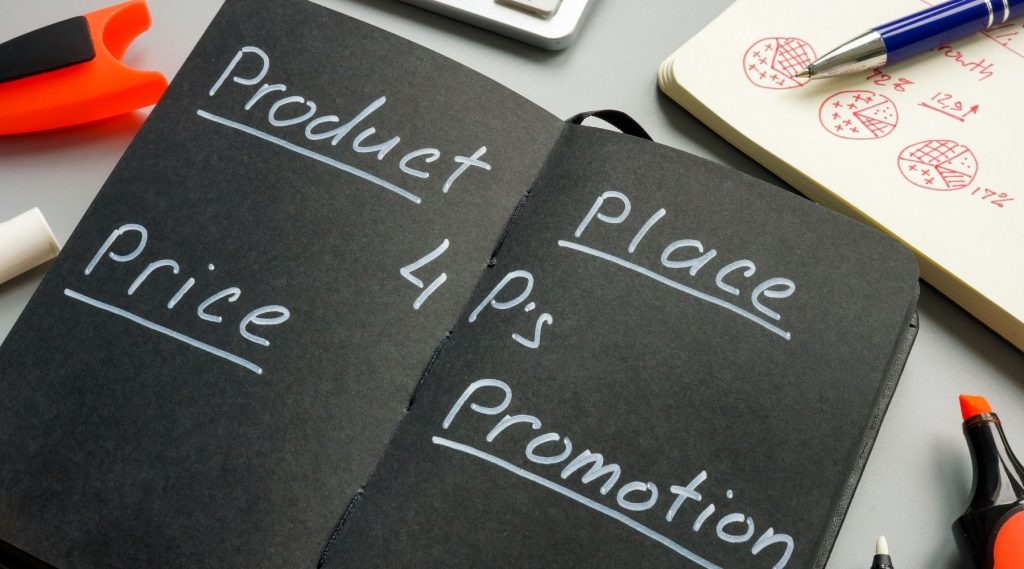
The 4 Ps of marketing are Product, Price, Place and Promotion: what you sell, how you charge for it, where and how customers get it, and how you tell them about it. For a service business, “product” is the service experience itself, and “place” is increasingly your Google presence and website, since that’s where most customers first find and contact you. Getting all four to line up is what makes marketing feel effortless instead of forced.
This guide defines each P with examples from service companies, shows how each one plays out online, and ends with worksheet questions you can answer for your own business.
Where the 4 Ps Come From
The framework dates to the 1960s, when marketing professor E. Jerome McCarthy grouped the many decisions behind a product’s success into four buckets. It was built with physical goods in mind, but it holds up well for services if you translate each P carefully. (Services also benefit from three additional Ps, which we cover in a moment.)
Product: What You Actually Deliver
For a service business, the product isn’t just the task. It’s the whole package a customer experiences: the scope of work, the quality standard, the guarantee, the communication, even how clean the job site is left.
Example: Two carpet cleaners both “clean carpets.” One offers a single standard clean. The other offers three packages (basic, deep clean with stain treatment, and pet odor treatment), a 30-day re-clean guarantee and a text when the technician is on the way. Same core task, very different products.
How it shows up online: Your service pages are your product description. Each service should have its own page explaining what’s included, how the process works and what makes your version different. Vague pages make a strong service look ordinary.
Price: How You Charge and What It Signals
Price includes your pricing model and how you position it, not just the number. Do you charge flat rates, hourly, by project, or by subscription? Do you offer financing, maintenance memberships or package discounts? Your price also signals your position: premium, mid-market or budget.
Example: An IT support company could charge per incident or offer a monthly managed plan. The monthly model appeals to businesses that want predictable costs and proactive monitoring; the per-incident model appeals to very small offices with occasional needs. The choice shapes who the company attracts.
How it shows up online: Even if you don’t publish exact rates, your website can explain how pricing works, what affects cost, and what’s included. Customers who understand the factors before they call are better qualified and less likely to be surprised.
Place: Where and How Customers Get You
For physical products, place means stores and distribution. For services, it’s where you operate and how customers access you: your service area, office location, hours, booking methods and whether you work on-site, in-office or remotely.
Today, place has a large digital component. Before anyone sets foot in your office or lets you into their home, they find you somewhere:
- Google Search and the local map results.
- Your Google Business Profile, with hours, reviews, photos and a call button.
- Your website, especially service and contact pages.
- AI assistants answering “who’s a good … near me” type questions.
- Directories and booking platforms relevant to your industry.
Example: A mobile dog groomer has no storefront. Their place is the service area they cover, the online booking calendar, and how easily they show up when someone in their area searches for mobile grooming. If any of those is weak, customers can’t reach them, however good the grooming is.
Promotion: How You Spread the Word
Promotion covers every way you communicate with potential customers: advertising, SEO, social media, email, referral programs, signage, sponsorships and word of mouth.
Example: A tutoring center promotes through Google Ads around back-to-school season, a referral credit for existing families, partnerships with two local schools’ parent groups, and a monthly email with study tips. Each tactic targets parents at a different stage.
How it shows up online: Most promotion sends people to your website. An ad, a social post or a referral link is only as effective as the page it lands on.
How the Ps Work Together
The Ps aren’t separate departments; they need to agree with each other. A premium price with a sloppy, outdated website (place) sends mixed signals. Heavy promotion for a service you can’t deliver quickly (product) creates unhappy reviews. Pull one lever, and check whether the others still fit.
Service businesses face extra challenges because customers can’t inspect a service before buying. That’s why marketers added People, Process and Physical Evidence to the mix. We cover those in the 7 Ps of marketing for service businesses.
4 Ps Worksheet
Answer these honestly, ideally with a teammate who’ll push back:
| P | Questions to answer |
|---|---|
| Product | What exactly is included in each service? What’s our quality standard or guarantee? What do customers praise or complain about most? How is our version different from competitors’? |
| Price | What pricing model do we use, and why? What position does our pricing signal? Do we explain what affects cost on our website? Do we offer options (packages, memberships, financing)? |
| Place | Where do we operate, and is that clear online? How easy is it to book or contact us? Is our Google Business Profile complete and accurate? Does our website load quickly and work well on phones? |
| Promotion | Which channels bring our best customers? Where are we spending effort with little return? Does every promotion lead to a page built to convert? Are we asking happy customers for reviews and referrals? |
Your answers become the raw material for a marketing plan. Our one-page marketing plan template shows how to turn them into goals, channels and 90-day actions.
Frequently Asked Questions
Are the 4 Ps still relevant today?
Yes, as a thinking tool. The terms are old, but the decisions they cover, what to offer, how to charge, where to be available and how to communicate, are the same decisions every business makes. What has changed is that “place” and “promotion” now happen largely online.
Which P should a small service business fix first?
Usually product and place. If the service experience isn’t consistently good, promotion only spreads the problem. If customers can’t easily find and contact you online, promotion leaks. Fix those two, then scale promotion.
How often should I revisit my 4 Ps?
Once a year at minimum, and any time you add a service, change pricing models, expand your service area or notice competitors shifting. A quick review alongside your quarterly marketing plan works well.
Make “Place” Work Harder
For most service businesses, the P with the biggest gap is place, specifically how well their website and search presence let customers find, understand and contact them. A clear, fast site with a page per service touches all four Ps at once. If yours isn’t pulling its weight, our website design team can help turn it into the storefront your marketing mix needs.