

Marketing Plan for Small Business: How to Build a Strategy That Actually Works
Every successful business shares one thing in common: a clear direction. Without a plan, marketing efforts can quickly become scattered, inconsistent, and ineffective. You might try different tactics, post occasionally, or run ads without a clear goal—but without a structured approach, results are often unpredictable.
That’s why creating a marketing plan for small business is essential.
A well-thought-out plan helps you define your goals, understand your audience, and choose the right strategies to grow your business. It turns your marketing from guesswork into a focused system designed to produce real, measurable results.
Start With Clear and Measurable Goals
Every effective marketing plan begins with clarity. Before choosing tools or platforms, you need to define what success looks like for your business.
Some goals are easy to measure. For example, you might aim to increase sales by a certain percentage, generate a specific number of leads, or grow website traffic over a defined period.
Other goals are more qualitative but just as important. You may want to build brand recognition, strengthen your online presence, or position your business as an authority in your industry.
The key is to combine both types of goals. When your objectives are clearly defined, every marketing decision becomes more intentional and aligned with your overall strategy.

Understand Your Budget and Resources
Once your goals are set, the next step is determining what you can realistically invest. Your budget plays a significant role in shaping your marketing plan.
Some businesses have the flexibility to invest in paid advertising right away, while others may need to focus on long-term strategies like SEO and content marketing.
For example, platforms like Google Ads or Facebook advertising can generate quick visibility, but they require ongoing investment. On the other hand, search engine optimization builds momentum over time and can deliver sustainable traffic without continuous ad spend.
There’s no single “right” approach. The best strategy depends on your goals, timeline, and available resources. What matters most is choosing a plan you can maintain consistently.
Define Your Marketing Objectives
Your goals set the direction, but your marketing objectives define how you’ll get there.
These objectives should connect directly to your business outcomes. For example, if your goal is to increase revenue, your marketing objective might be to generate more qualified leads.
Common objectives include:
- Generating leads
- Increasing brand awareness
- Driving website traffic
- Building customer engagement
Rather than trying to achieve everything at once, focus on a few core objectives that align with your current stage of growth. This keeps your strategy focused and easier to execute.
Identify Your Target Audience
One of the most important parts of any marketing plan is understanding who you’re trying to reach.
Without a clear target audience, your messaging can become too broad and less effective. When you know exactly who your ideal customer is, your marketing becomes more relevant and impactful.
Consider factors such as:
- The type of customers you serve
- Your location and service area
- Customer needs and challenges
- Buying behavior and preferences
The more specific you are, the easier it becomes to create content and campaigns that resonate with your audience.
Once you understand your audience, the next step is deciding where to reach them.
Different marketing channels serve different purposes, and not all platforms will be equally effective for your business.
Search engine optimization helps your website rank on Google, making it easier for customers to find you organically. If your goal is to generate consistent, long-term traffic, investing in a strong SEO strategy can help your business rank higher and attract qualified leads over time.
Social media platforms like Facebook allow you to engage with your audience and build brand awareness.
Paid advertising can provide immediate visibility, while content marketing helps establish long-term authority.
The key is to choose channels that align with your audience’s behavior. If your customers are actively searching for services, SEO may be your priority. If they spend more time on social platforms, social media marketing may be more effective.
Build a Balanced Marketing Strategy
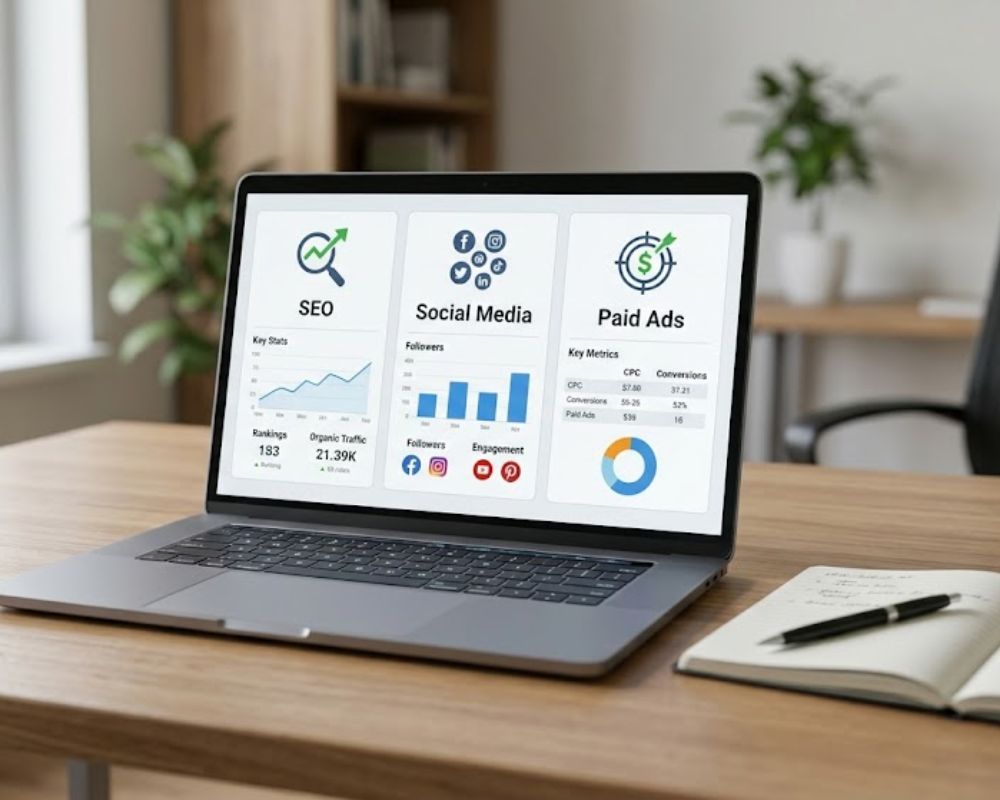
A strong marketing plan doesn’t rely on just one tactic. Instead, it combines multiple strategies that work together to achieve your goals.
For example, SEO can bring in long-term traffic, while paid ads can generate quick leads. Social media can build engagement, while email marketing nurtures relationships.
The goal is to create a system where each channel supports the others.
When your strategy is balanced, your marketing becomes more resilient and effective over time.
Stay Consistent With Your Efforts
Consistency is often the difference between success and stagnation.
Many businesses start strong but lose momentum when results don’t happen immediately. However, marketing is a long-term effort that requires ongoing attention.
Whether it’s publishing content, running campaigns, or engaging with your audience, consistency builds trust and visibility.
A structured plan helps you stay on track, ensuring that your marketing efforts continue even during busy periods.
Track Performance and Adjust Your Strategy
No marketing plan is perfect from the start. The most successful strategies evolve over time based on performance.
By tracking key metrics such as website traffic, lead generation, and conversion rates, you can identify what’s working and what needs improvement.
This allows you to refine your approach and focus on the tactics that deliver the best results.
A data-driven strategy ensures that your marketing efforts become more effective over time.
Avoid Common Marketing Plan Mistakes
While creating a marketing plan is essential, there are a few common mistakes to watch out for.
Trying to do too much at once can lead to burnout and inconsistency. It’s better to focus on a few strategies and execute them well.
Another common issue is failing to define clear goals. Without direction, it’s difficult to measure success or make meaningful improvements.
Finally, neglecting your audience can weaken your results. Your marketing should always be centered around the needs and preferences of your customers.
Final Thoughts: Build a Plan That Drives Real Growth
A successful marketing plan for small business isn’t about following trends—it’s about creating a strategy that aligns with your goals, audience, and resources.
When you take the time to define your objectives, understand your audience, and choose the right tactics, your marketing becomes more focused and effective.
Instead of reacting to opportunities, you’re proactively building a system that supports long-term growth.
At OrangeSky Websites, we help businesses create customized marketing strategies designed to generate leads, increase visibility, and drive measurable results. From SEO and content marketing to paid advertising and full digital strategies, our team works with you to build a plan that fits your business.
Ready to create a marketing plan that actually works?
Contact OrangeSky Websites today and let’s build a strategy that moves your business forward.