
What to Look for When Choosing a Website Design Company
Your website is often one of the first places potential customers interact with your business. It can shape how people see your company, how easily they find your services, and whether they decide to contact you or move on to a competitor.
Choosing the right company to build that website is therefore about much more than finding someone who can make it look good.
If you’re wondering how to choose a website design company, look beyond colors, layouts, and pricing. The right partner should understand your business goals, your customers, search engine optimization, mobile usability, website performance, and what happens after your website launches.
Here’s what to consider before making your decision.
1. Start With Your Business Goals
Before comparing website design companies, think about what you actually need your website to accomplish.
For one business, the primary goal may be generating phone calls and quote requests. Another may need online appointment scheduling, e-commerce functionality, lead generation forms, or a website that supports a larger SEO strategy.
A good website design agency should ask about these goals before discussing fonts, colors, or page layouts. Your website should be designed around what you want visitors to do and the information they need before taking action.
If an agency jumps immediately into design without trying to understand your business, that may be a sign that you’ll receive a visually attractive website without a clear strategy behind it.
2. Review Their Website Design Portfolio
A portfolio gives you a better idea of what a website design company can actually deliver.
Don’t look only for websites that match your personal style. Pay attention to whether the sites feel professional, easy to navigate, and appropriate for the businesses they represent.
Look at different examples and ask yourself whether each website clearly communicates what the business does. Is important information easy to find? Are calls to action visible? Does the design feel intentional rather than simply decorative?
A strong portfolio should demonstrate that the company can adapt its work to different businesses rather than applying nearly identical designs to every client.
3. Make Sure They Understand Responsive Design
Your customers aren’t all visiting your website from a desktop computer. They may find you from a smartphone while they’re at home, at work, or searching for a nearby service.
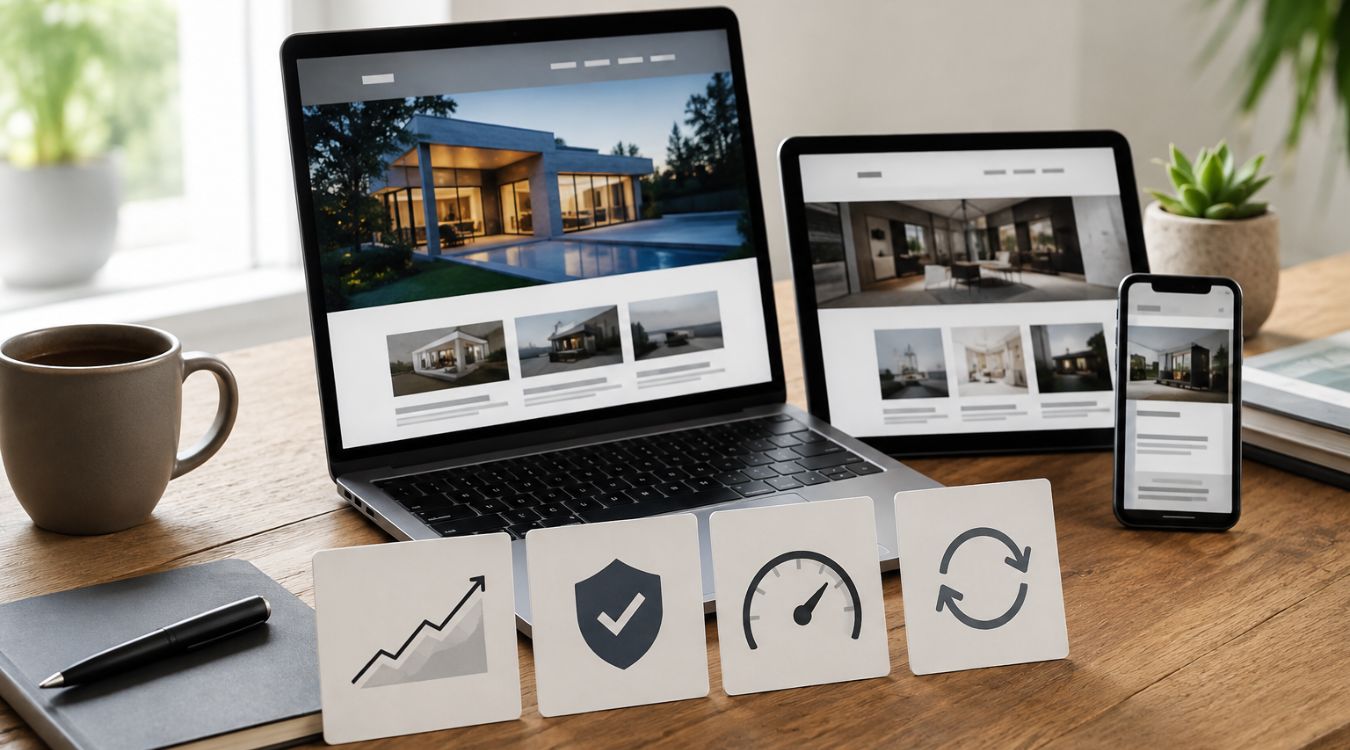
Professional website design should provide a consistent experience across desktop computers, tablets, and smartphones.
Responsive design goes beyond shrinking a desktop page to fit a smaller screen. Navigation, text sizes, images, forms, buttons, and page layouts should all adapt to make the website comfortable to use on different devices.
Before choosing an agency, review some of its completed websites on your own phone. A portfolio can look impressive on a large monitor while providing a very different experience on mobile.
4. Ask How SEO Is Incorporated Into the Website
A beautiful website doesn’t provide much value if potential customers can’t find it.
Search engine optimization should be considered during the website development process rather than added as an afterthought. Site structure, page headings, URLs, mobile usability, website speed, internal linking, content, and technical setup can all influence search performance.
This doesn’t mean a new website will automatically rank at the top of Google. SEO is an ongoing strategy. However, building the website on a strong SEO foundation can make future optimization much easier.
Ask potential agencies how they approach SEO during website development and whether they offer ongoing SEO services after launch.
5. Find Out Who Creates the Website Content
Design gets attention, but the words on your website often determine whether visitors understand your value and take action.
Before hiring a website design company, find out whether you’ll need to provide all of the copy yourself or whether content support is included.
Strong website content should clearly explain your services, answer customer questions, communicate what makes your business different, and guide visitors toward the next step. It should also incorporate relevant search terms naturally when SEO is part of the strategy.
If copywriting isn’t included, ask whether the company can provide it as an additional service or work with content you already have.
6. Ask About Website Speed and Performance
Large images, unnecessary scripts, excessive plugins, poor hosting, and inefficient development can all make a website slower than it needs to be.
Website performance matters because visitors don’t want to wait for pages to load. A slow site can create frustration before a potential customer has even had the chance to learn about your business.
Performance also contributes to the overall user experience and can affect SEO.
Ask your potential web designer how they optimize images, handle plugins and third-party scripts, approach caching, and test website performance before launch.
7. Understand What’s Included in the Price
The least expensive proposal isn’t necessarily the most affordable option in the long run.
An affordable website design should provide good value without leaving out essential components you’ll have to purchase separately later.
Before comparing quotes, make sure you understand exactly what each proposal includes. One company may quote only the initial website build, while another includes content assistance, mobile optimization, SEO setup, hosting, security, backups, and post-launch support.
Ask about potential ongoing expenses as well. Knowing the full cost of owning and maintaining the website makes it easier to compare proposals fairly.
8. Find Out What Happens After Launch
Launching a website isn’t the end of the process.
WordPress, themes, plugins, security tools, and other website technologies need ongoing attention. Your business may also need content updates, new pages, backups, troubleshooting, or performance improvements over time.
Ask whether the company provides website hosting and maintenance after launch and what that service includes.
Working with a team that can continue supporting your website means you won’t have to search for someone new every time you need an update or encounter a technical issue.
9. Pay Attention to Communication
Building a website requires collaboration. Your designer needs information about your business, while you need clear updates about the project.
Pay attention to communication before you sign a contract. Are questions answered clearly? Does the company explain technical concepts in a way you understand? Do they listen to your concerns rather than immediately pushing a particular solution?
A strong website partner should be able to provide professional recommendations while still respecting your knowledge of your own business.
Good communication during the sales process can provide useful insight into what working together may be like once the project begins.
10. Look for Experience Beyond Visual Design
The best web design company for your business may not simply be the one with the most visually impressive portfolio. Look for a team that understands how design connects with marketing.
A business website may need to support SEO, paid advertising, email marketing, lead generation, analytics, content marketing, or other digital campaigns.
When these areas are considered together, your website can become a stronger part of your overall marketing strategy rather than operating as an isolated project.
Questions to Ask a Web Designer Before Hiring
Before making your final decision, having a simple web designer checklist can help you compare companies more effectively. Some useful questions to ask a web designer include:
- What is included in the website design proposal?
- Will the website be fully responsive?
- How is SEO considered during development?
- Who will provide the website copy and images?
- Do you provide hosting, maintenance, and ongoing support?
- How will I request changes after the website launches?
The answers should give you a clearer understanding of what you’re purchasing and what kind of relationship you can expect after the project is completed.
Watch Out for Website Design Red Flags
Some warning signs are easy to overlook when you’re excited about starting a new website.
Be cautious if a company guarantees specific Google rankings, provides an unusually vague proposal, cannot clearly explain who owns the website after completion, or doesn’t discuss mobile performance and ongoing maintenance.
You should also understand who controls important assets such as your domain name, hosting account, website files, and analytics accounts. These details are much easier to clarify before a project begins than after the relationship ends.
Should You Choose a Freelancer or Website Design Agency?
Both freelancers and agencies can produce excellent websites. The better option depends on your project’s complexity and the level of ongoing support you need.
A freelancer may be a good fit for a straightforward project with limited requirements. An agency may provide broader expertise when your website needs design, development, SEO, content, hosting, maintenance, PPC, and ongoing marketing support.
Rather than choosing based on company size alone, consider whether the provider has the skills and resources required to support your goals now and as your business grows.
Think Beyond the Website Launch
A website should continue supporting your business long after launch day.
As your company grows, you may add services, target new locations, publish new content, launch advertising campaigns, or change how customers contact you. Your website should be flexible enough to evolve with those needs.
That’s why choosing a website company should be viewed as a long-term business decision rather than simply purchasing a one-time design.
The right partner can help you improve the website over time based on customer behavior, search performance, new business priorities, and changes in technology.
Why Choose OrangeSky Websites?
At OrangeSky Websites, we understand that your website needs to do more than look professional. It should help potential customers understand your business, find the information they need, and take the next step.
We provide professional website design along with SEO, PPC management, website hosting, maintenance, content support, and other digital marketing services. This allows businesses to work with a team that understands both the website itself and the marketing strategies that help bring people to it.
Whether you’re building a new website or replacing one that no longer supports your goals, we focus on creating a strong digital foundation that can grow with your business.
Ready to talk about your website? Contact OrangeSky Websites to discuss your goals and learn how we can help create a professional website designed around your business.
Final Thoughts
Learning how to choose a website design company comes down to looking beyond appearance and asking the right questions.
Consider the company’s portfolio, responsive design approach, SEO knowledge, content capabilities, website performance, pricing, communication, hosting, maintenance, and ongoing support. Most importantly, look for a company that takes time to understand what your business needs the website to accomplish.
Your website is an investment in your online presence. Choosing the right partner can help ensure that investment continues providing value long after the site goes live.
Frequently Asked Questions
How do I choose a good website design company?
Look for a company with a strong portfolio, responsive design experience, clear pricing and communication, knowledge of SEO and website performance, and reliable post-launch support. The company should also take time to understand your business goals before recommending a solution.
How much should a professional business website cost?
Website costs vary considerably depending on the number of pages, functionality, content requirements, design complexity, e-commerce features, integrations, and ongoing services. Compare what is included in each proposal rather than making a decision based solely on the lowest price.
Should SEO be included in website design?
Basic SEO considerations should be incorporated into the website’s structure and development. More competitive businesses may also need an ongoing SEO strategy involving content, technical improvements, local optimization, and authority building after launch.
Do I need website maintenance after launch?
Yes. Websites require ongoing updates, backups, security monitoring, compatibility checks, and performance maintenance. Regular maintenance helps reduce technical problems and keeps your website running reliably.
How long does it take to build a business website?
The timeline depends on the size and complexity of the project, how quickly content and feedback are provided, and whether custom functionality is required. Your website company should provide a realistic timeline based on your specific project before work begins.