
How Long Does SEO Take to Rank? What Businesses Need to Know
One of the most common questions businesses ask before investing in SEO is simple: How long will it take to see results?
It’s a fair question—but not one with a one-size-fits-all answer.
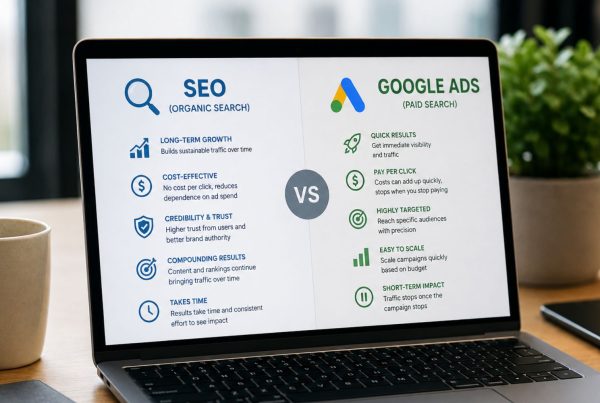
Unlike paid advertising, where visibility can happen almost instantly, search engine optimization is a gradual process. It requires consistency, strategy, and time to build authority in search engines like Google Search.
If you’ve been expecting immediate rankings, it’s important to understand how SEO actually works—and why patience plays such a critical role in long-term success.
Why SEO Doesn’t Deliver Instant Results
Search engines are designed to deliver the most relevant, trustworthy results to users. That means they don’t simply rank websites based on who publishes content first or uses the most keywords.
Instead, they evaluate a wide range of factors over time.
When your website is updated or optimized, search engines need to:
- Discover your content
- Crawl your pages
- Index the information
- Evaluate relevance and quality
- Compare it against competitors
This process doesn’t happen overnight. It requires consistent signals that your website is valuable and trustworthy.
SEO is less like flipping a switch—and more like building momentum.

The Typical SEO Timeline
While every business is different, most SEO campaigns follow a similar general timeline.
In the early stages, improvements are often happening behind the scenes. Technical fixes, keyword optimization, and content updates lay the groundwork for future growth.
For most websites, noticeable improvements in traffic and rankings begin to appear within 4 to 6 months. In more competitive industries, it may take longer to see significant movement.
That doesn’t mean nothing is happening during that time—it means your website is building authority step by step.
Key Factors That Affect SEO Rankings
Not all SEO timelines are created equal. Several variables influence how quickly your website can rank.
Competition
If you’re operating in a highly competitive industry, ranking will naturally take longer. Established competitors may already have strong domain authority, extensive content, and high-quality backlinks.
Breaking into those rankings requires consistent effort and a well-planned strategy.
Content Quality and Consistency
Content plays a major role in SEO success. Search engines prioritize websites that provide valuable, relevant, and well-structured information.
Publishing high-quality content regularly helps signal that your website is active and authoritative.
Thin or inconsistent content, on the other hand, can slow down your progress.
Keyword Strategy
Not all keywords are equal. Some are highly competitive, while others offer more accessible opportunities.
Targeting long-tail keywords or more specific search terms can help your website gain traction faster. Over time, this builds the foundation to compete for broader, high-volume keywords.
Inbound and Outbound Links
Links act as signals of credibility.
- Inbound links (backlinks): When other websites link to your content, it tells search engines your site is trustworthy.
- Outbound links: Linking to relevant, authoritative sources can also strengthen your content’s credibility.
Building a strong link profile takes time, but it plays a significant role in improving rankings.
Why Patience Pays Off in SEO
It’s easy to feel frustrated when results don’t appear immediately. However, the delayed nature of SEO is actually what makes it so powerful.
Once your website starts ranking, the benefits compound over time.
Unlike paid ads that stop generating traffic when the budget ends, SEO continues to deliver results long after the initial work is done.
A well-optimized page can:
- Generate consistent organic traffic
- Attract high-quality leads
- Build brand credibility
- Support long-term business growth
SEO is an investment—not an expense.
The Role of Consistency in Ranking Growth
Consistency is one of the most overlooked aspects of SEO.
Many businesses start strong but lose momentum when they don’t see immediate results. This can stall progress and delay rankings even further.
A consistent SEO strategy includes:
- Regular content updates
- Ongoing keyword optimization
- Technical website improvements
- Link-building efforts
Each of these elements contributes to your overall authority. Over time, they work together to improve your visibility in search results.
Avoiding Unrealistic SEO Promises
If you’ve come across services that promise “page one rankings overnight,” it’s worth approaching those claims with caution.
SEO doesn’t work that way.
Search engines prioritize authenticity and long-term value. Quick fixes or shortcuts often lead to penalties rather than sustainable results.
A legitimate SEO strategy focuses on:
- Gradual growth
- High-quality content
- Ethical optimization practices
- Data-driven improvements
Real results take time—but they’re far more stable and valuable.
Measuring Progress Along the Way
Even if you’re not ranking on page one yet, there are signs that your SEO strategy is working.
Look for:
- Increased website impressions
- Growth in keyword rankings
- Higher engagement on content
- More organic traffic over time
These early indicators show that your website is gaining traction and moving in the right direction.
SEO success is rarely instant—but it is measurable.

Building a Strong Foundation for Long-Term Results
The businesses that benefit most from SEO are the ones that treat it as an ongoing strategy rather than a one-time task.
By investing in your website’s structure, content, and authority, you create a foundation that supports continuous growth.
Over time, your website becomes more visible, more trusted, and more effective at converting visitors into customers.
Final Thoughts: SEO Is a Long-Term Growth Strategy
So, how long does SEO take to rank?
For most businesses, it takes several months to begin seeing meaningful results—and longer to achieve top rankings in competitive markets.
But that timeline reflects something important: SEO is built on credibility, consistency, and value.
When done correctly, it doesn’t just bring traffic—it brings the right traffic. People who are actively searching for what you offer and are more likely to convert.
At OrangeSky Websites, we help businesses build SEO strategies designed for long-term success. From keyword research and content optimization to technical improvements and ongoing performance tracking, we create systems that deliver measurable growth over time.
Ready to build a strategy that works—even if it takes time?
Contact OrangeSky Websites today and start turning your website into a long-term source of traffic and revenue.