By: Kym McNicholas

You have a small business and you haven’t bought into the social media craze? Guess what? Silence is no longer an option. People are online talking about your company as you read this, whether you like or not.  If you don’t engage in the conversation, you risk losing your customers. If You have more ideas, please share them in the comments section at the bottom of the post. The more ideas, the better.

1. ASSESS YOUR ASSETS:
The first action you should take before engaging in online marketing or social media marketing and engagement is to look at what are you’re trying to promote. What are your assets? Who are your target customers? It may seem obvious but some times we don’t see what is in front of us and you might be overseeing a good opportunity.

2. SIGN-UP FOR SOCIAL MEDIA:
Facebook, Twitter, Google+, YouTube and LinkedIn. Facebook allows you to create a business page.  Make sure you read the rules for businesses first. You can even ‘create a page’ through your personal account, if your business allows you to do so. That makes it easy for small business owners to manage it. On LinkedIn, every employee becomes your best advocate.

3. FIND A SOCIAL MEDIA MANAGER:
Managing multiple social networks is daunting. So, before you start posting content, requesting friends and adding followers, sign-up for a social media manager such as Ping.fm and HootSuite. It allows you to manage all of your accounts on one site and schedule your messages to deploy so you don’t have to sit over it all day. It also allows you to review the success of the tweets real-time with click-through statistics. And you can gather all the mentions of your brand, industry or search terms on Twitter through it as well.

4. POST UPDATES:
It’s important to have content on your social media pages before you start adding friends and followers. When you try to find friends, they’re going to look at the page to see if they want to follow you. So you need to give them a reason to follow you first. Provide valuable information about the industry. Post pictures of your business or people enjoying your business. On YouTube, post videos of your business, customer experiences, and encourage customers to make their own. You can also ‘favorite’ other YouTube users’ videos and they will end up on your page. If you’re a small airport, posting cool aerobatic videos of the Patriots’ Jet Team is a possibility that would add value to those who ‘subscribe’ to your page. Also, share those videos on your other accounts such as Twitter, Facebook and even LinkedIn.

5. FIND FRIENDS AND FOLLOWERS:
Twitter and Google+ are easiest. Search keywords to find followers. On Twitter,  If you’re a small airport, for example, search ‘pilot. You can also search ‘flying.’ Searching your town and surrounding areas as well to find key influencers, news outlets, bloggers and city officials. Also, search for large players in your market. For airports, try Boeing, Virgin America, United Airlines and Southwest Airlines. If they share your posts, you have the potential to reach thousands.  I suggest adding just a few people at a time.  On Google+, comment on one of their posts immediately. On Twitter, mention them in a post immediately. You can also comment on one of their posts or simply say that you look forward to following their great content.  If it’s a reporter or blogger, give them story ideas and leads that have nothing to do with your business. Get them to trust you. To find fans on Facebook, it’s best to start with real friends and family. You can also pay as little as $100 to have an ad for your Facebook page syndicate across the network for a designated period of time.

6. ENGAGE FRIENDS AND FOLLOWERS:
I once received a friend request on Facebook from the owner of a flower shop. When she asked to be my friend, she typed a personal message, saying how impressed she was with my work and how she’s enjoyed watching my work evolve. I couldn’t remember where I knew her from. Was it a television station, radio station, or was it from school? I wasn’t sure. I was too embarrassed to ask. And she seemed harmless. So, I confirmed her friend request and wrote her a note back thanking her for her feedback and saying that I look forward to connecting. She proceeded over the next few months to follow my videos and stories. She engaged in great debates and conversation with me as well as my friends. I knew just days after I added her that I didn’t know her personally. But I was so impressed with her and the relationship we’d developed over the months, that when I was traveling to her town, Fresno, I suggested we have lunch. When I arrived she had a full basket of goodies from her shop, including the best dark chocolate covered strawberries I’ve ever tasted, waiting for me. Since then, I have been a regular customer and am quick to share her products on my page.
So, your first priority should be building that relationship with people, not pitching your service or product.
Give them story ideas and leads that have nothing to do with your business.

On Facebook:
Share their links on your wall and/or comment on them. Wish them a Happy Birthday. Birthdays are big on Facebook. Always acknowledge them. Maybe even offer them a discount coupon for a birthday treat via Facebook.

On Twitter:
Retweet their stories and comment on them! Reply to each and every message. Keep the conversation going. Get them to trust you. For example, one of my favorite Twitter followers is an amazing example of how to do it right. She has thousands of followers. But she has even more friends. She friended thousands of people little by little and engaged with them, retweeting their tweets, commenting on their tweets, checking in on topics those folks had tweeted on days before. Now, she’s constantly in conversation with folks like Morgan Fairchild, Alyssa Milano and Kathy Ireland. Who would’ve thought? She’s not famous. The key is she knows how to engage. And she never misses a #FF (Follow Friday). On Friday’s many people share with their friends, their favorite people to follow, encouraging others to follow them as well.

Google+:
It’s a cross between Facebook and Twitter. It’s great because you can create circles of certain people you want to target for different reasons. It makes it easier to post certain promotions to one group vs. another.
LinkedIn: The best way to engage with potential customers is by joining industry groups and starting group discussions.

Very important:
Do not ask for help/favors from people until you’re friends or at least warm acquaintances with them. And the #1 way to become friends is to offer tons of help/favors without expecting anything in return. In the words of Michael Ellsberg, Forbes Contributor and Author of "Self-Educated Millionaires: The Seven Skills You’ll Never Learn in College, "Networking is a *long term* activity – it CANNOT be done for short-term results. Follow these basic concepts, and you’ll be ahead of 99.99% of the knuckleheads out there who are botching their networking attempts online!" Also, a great book to read is by Brian Solis, Principal at Altimeter Group, "Engage: The Complete Guide for Brands and Businesses to Build, Cultivate, and Measure Success in the New Web."

7. STAY CURRENT:
Get alerts sent to your phone when folks engage with you via your social networking sites – at least in the beginning – that way you respond quickly.

SEPTEMBER 13, 2011 by eMarketer.com

More websites are adding sharing buttons, and can see up to seven times the mentions as a result

One way websites and content publishers can get readers and consumers to share their content is to make sure there are easy ways to do so, including buttons on the homepage for sharing on Facebook, Twitter, LinkedIn and now Google+.

SEO platform BrightEdge Technologies studied the top 10,000 websites for its “Social-Share Analysis: Tracking Social Adoption and Trends” report in August 2011. It looked at how many sites included these social links or plugins on their homepages and found that more sites are using such sharing tools in 2011, with 53.6% of the top 10,000 websites including at least one social link or plugin. This is up from 52.8% in 2010.

Websites Worldwide that Have Social Links or Plugins on the Homepage, Aug 2011 (% of top 10,000 websites)

Facebook is the most popular sharing tool on website homepages, with 50.3% of sites studied containing a Facebook share button, according to the study. Additionally, 42.5% of sites had a share button for Twitter, while 8.1% included Google+ and 4% included LinkedIn.

To look at the effect these social plugins have on a website’s traffic and how much content is shared, BrightEdge also analyzed more than 4 million tweets, noting how often a site with a tweet button was mentioned on Twitter. On average, a website without a Twitter share button was mentioned four times, while a site with a tweet button was mentioned 27 times. Including a Twitter plugin button increased mentions on Twitter almost sevenfold.

Twitter Mentions for Websites Worldwide with and Without a Tweet Button, Aug 2011 (average per site in the top 10,000)

It seems natural that sites would want to include these share buttons to get more readers and consumers to mention content on social sites, but nearly half of the top websites did not include any of the social plugins studied. When it comes to social media marketing, brands shouldn’t forget about their own websites and should make sure that their owned media is also social—not only encouraging readers to share content, but also noting how they can “like” or follow the company on Facebook and Twitter.

by Rob D. Young

Google has added new features to the Google Places app, Google Maps, Google Music (beta), and the Blogger app. Here’s a brief outline of the key features.

Google Places iOS App

google-places-app-sept-2011

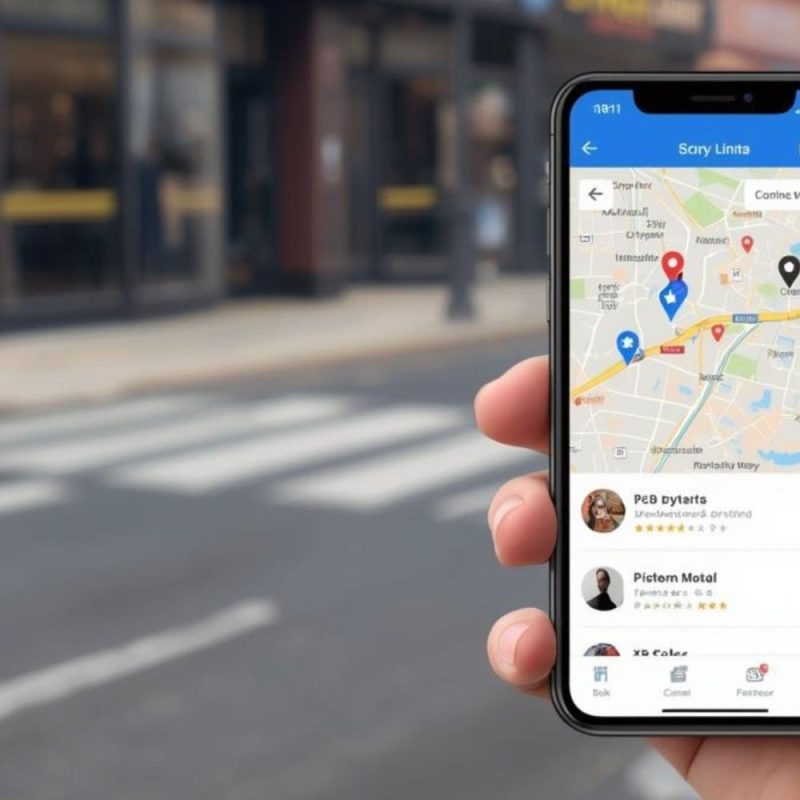
IPhone and iPad users will be getting some new filter options in the most recent Google Places release. Specifically, you can narrow your results by its distance, overall rating, or average price per plate. Users will also be able to see whether the location is open. Further, reviews – previously available as snippets – can now be read in full.

Google Maps for Android

google-maps-app-update-sept-2011

Part of the reason we’re not seeing an identical release of Google Places for Android is that Places is largely integrated into Android’s Google Maps. Unsurprisingly, then, Google Maps is getting its own additions, including the option to quickly see any location you’ve rated as 4 or 5 stars and to upload photos with Places reviews.

The Google Music (Beta) Web App

google-music-ios-app-sept-2011

The cloud-based Google Music application was released only for Android. However, all users with a modern smartphone can now access a web app that gives access to the features. This is especially notable because on iOS the music can continue to play in the background even as users open other applications or otherwise play around with their phone.

Users will need to have their music uploaded to the cloud and have a current login for the Music (beta) service.

The Blogger iOS App

blogger-app-update-sept-2011

The newest version of Blogger for iPhone and iPad users will allow you to publish posts, save drafts, and access drafts from your mobile device. That includes any drafts saved from another system – such as your computer or a different mobile device. You can take pictures directly from the app and add those pictures to your post.

This week’s common trend? It seems that Google is giving iOS users a lot of love while focusing on visual elements of the mobile experience.

by Stan Schroeder

Google Maps for Android has been updated to version 5.10.0, which brings two new nifty features: the ability to attach photos to Place reviews and the option to see Places you’ve rated with 4 or 5 stars in your map view.

The first option is self explanatory — it just lets you add a little more flavor to your reviews with a photo. The second option is a great incentive to use ratings more often, as the most places most important to you will show up on your map every time you fire it up.

The new version of Google Maps is available now in the Android Market.

Sep 8, 2011 by Matt McGee

It’s been a year since Bing began powering the natural search results on Yahoo and the combination has gained a little more than 4% market share in the U.S. since then. Google has dropped more than six percentage points in the same time period. All of that is according to the latest Experian Hitwise report, which covers US search activity in August.

Hitwise says Bing-powered search accounted for 28.99% of all searches last month, up from 28.05% the previous month.

But in the bigger picture, Bing-powered search has upped its market share by about 4% since Yahoo began using Bing’s search results. That change was completed back on August 24, 2010. A couple weeks after that, Experian Hitwise said that Bing and Yahoo had a combined 24.56% market share in the U.S. during the first week of the partnership.

Where’d the Bing-Yahoo gains come from? According to the Hitwise numbers, they came at Google’s expense. In August 2010, Hitwise reported Google’s market share at 71.59%; as the chart above shows, that’s now down to about 65%.

Small gains? For sure. And that’s exactly what Microsoft CEO said in March 2010, when he keynoted our SMX West conference: “Tomorrow’s goal is to gain a few points, a tenth here, a tenth there, and just keep working and working.”

BY KIT EATON

The QR code is an acquired taste. But just as the tech is primed to be overtaken, America is going nuts for all things QR.

Forget the bad press, the QR code seems like such a clever idea: Like a smarter barcode for the 21st century, it hooks up through your smartphone or computer’s camera to some code that reads it, and translates its spotty pattern into a URL, or a phone number, or a passage of text, or a digital business card–all instantaneously. They’ve been used all over the globe for ages, but the tech is having a moment in the U.S.

Check out Victoria’s Secret’s new “Sexier Than Skin” ad campaign–I bet it already grabbed your eye. It’s new, undeniably clever, certain to tempt many a viewer into trying QR codes in a way that perhaps no other ad ever has, and it’s so “meta” (with the tech itself acting as part of the visual joke) it’s hard to imagine the ad campaign working any other way. By holding a smartphone up to the ad, snapping the QR code and waiting to see what happens, the interested “viewer” is automagically taken to a URL for an image that fills in the gap, not with saucy pink pixels but with saucy underwear.

Then check out the odd news from a recent survey by Vizibility Inc. of legal professionals in the U.S. in July and August. Among the various results: 85% of legal marketers surveyed were aware of QR code technology; 35% already use them; and a further 45% plan on using them in the next 12 months. That means 80% of legal professionals could be using QR codes inside a year. In the data-rich world of lawyers in the U.S., the codes are useful for marketing (so a simple advert can link to rich biographical data and contact info) and also enable a simple paper business card to link to a website, or transmit useful contact details directly to a prospective client’s cell phone.

This summer that most august of organizations the United States Postal Service ran a two-month promotional campaign to try to convince its commercial mailer clients of the benefits of using QR as a marketing tool, and just the other day the agency’s manager of marketing mail deemed the campaign a success, noting he was “very pleased” and that results beat expectations. The USPS had been offering a 3% posting discount on letters and flat parcels for clients who put a QR code on the front or inside the mail–a bold step, but it’s designed to demonstrate the continuing usefulness of physical mail in an increasingly online era, because commercial mailing partners can actually add value to their packages from an end-client point of view.

A firm called Pet Check is taking dog walking into the 21st century, with clients able to track their pooch’s progress around the walking route online, via GPS. QR code tags are a crucial part of the model, enabling hassled walkers to quickly “check in” a dog and check them out again at the end of the walk. The firm just launched in California, and has plans to go nationwide.
In the fashion world, iconic American fashion brand Polo Ralph Lauren was a super-early adopter of QR codes for use with mobile shopping and marketing.

Quaker, a food firm you may not necessarily think of as being hugely 21st century, has just launched a QR code-enabled promotional campaign to push sales of its Chewy Granola bars via a digital personal message from Nick Jonas. The clip is accessed by a QR code printed on the box, and the campaign’s pinnacle is a personalized message to the buyer’s child for a birthday or good luck message in which Jonas uses the child’s name.

Temple City Chamber of Commerce just installed its first QR signpost–the first of many planned–as a way of sharing information about the city, and navigating tourists and locals to relevant parts of the city’s website. Microsoft is embracing the tech as a dynamic and super-swift way to link game data from a console like the Xbox 360 to partner games on a Windows Phone smartphone. And there are countless other companies of all sorts, right down to real estate agents in the U.K., inspired by rapid adoption by U.S. firms, that’re rushing to embrace the tech.

There’s one simple reason for this: The smartphone revolution. We’re buying them by the billion, and pretty much every one comes with a camera that’s good enough to quickly and easily snap a photo of a QR code and pass the data to a relevant app–instantly linking a real-world piece of data to a digital portal for enhanced content. Yes the technology is about to be replaced–with a bevy of alternatives, from RFID-tagged stickers, posters, and products to real-world object recognition in augmented reality smartphone apps. But QR codes, now seemingly booming in the U.S., aren’t likely to be going anywhere soon.

Compared to some alternatives they’re super-simple to integrate into products (requiring merely a spatter or two of ink, and thus easily incorporated into typical printing runs) and cheap too, especially compared to RFID systems that typically need a fine wire loop antenna and a tiny slice of silicon chip. And as we highlighted previously, in comparison to AR object recognition in which a real world object is unidentifiably “tagged” until it reveals itself in an app, QR codes are visible and self-advertising…consumers know what to do with ‘em. Millions of consumer, in fact–14 million American souls in June 2011 alone.

eMarketer.com

Most users are on Twitter to communicate with friends, get news or be entertained. But brands are making an impact.

As Twitter evolves its advertising platform, with the latest development being Promoted Tweets to followers, there is concern as to how consumers will react to seeing ads from brands in their Twitter feeds.

Market research firm Lab42 surveyed US Twitter users in August 2011, asking about their habits related to brand engagement. Only 11.1% of US Twitter users said that following brands was the leading reason why they use the site. The top reasons include following friends (17.4%), to get a good laugh (15.6%), to get the news (15.1%) and to share the news (13.9%).

Additionally, about half of US Twitter users follow between one and 10 brands on the site. Only 10.6% of respondents said they don’t follow any brands, while 8.2% of US Twitter users follow more than 50 brands on Twitter.

However, when it comes to consumers’ attitudes toward Twitter’s primary ad product, Promoted Tweets, things are promising. Only 10.9% of US Twitter users said Promoted Tweets are “annoying and take away from the Twitter experience.” More often, Twitter users are open to Promoted Tweets, with 24.8% reporting that they have seen Promoted Tweets from brands that are relevant to them. More than one-fifth of users said they have gotten a discount (21.6%) or have found out about a new brand through a Promoted Tweet (21.2%). Additionally, 14% of respondents said they have retweeted a Promoted Tweet.

As marketers become more noticeable to consumers on Twitter through Promoted Products advertisements, Twitter users seem open to engaging. If these ads stay relevant and allow consumers to control how they interact with brands, marketers will have yet another social ad platform to use to build up followers.